Siren System
High-power audible warning solution for emergency alerts and rapid site-wide notification in critical situations
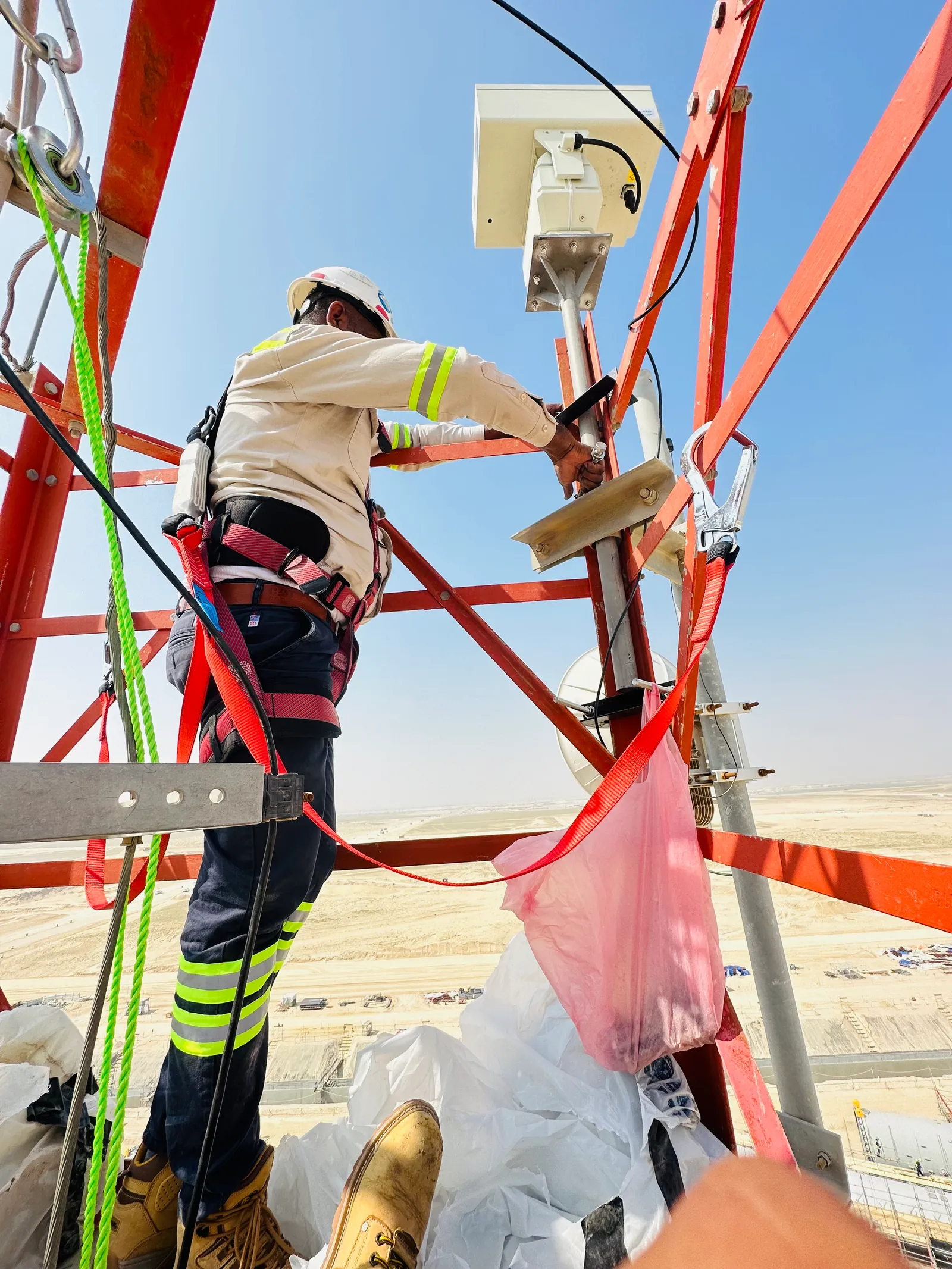
Overview
High-power audible warning solution for emergency alerts and rapid site-wide notification in critical situations
Key Features
High-decibel emergency warning alerts
Multiple tone patterns for scenarios
Manual and automatic activation
Reliable outdoor coverage
Applications
Industrial sitesConstruction projectsRemote facilitiesEmergency zones
Frequently Asked Questions
- What is an industrial warning siren?
- An industrial warning siren is a high-output audible device that delivers an unmistakable warning across a large outdoor area such as a process plant, tank farm or port. A siren tower is the supporting structure that raises the siren array high enough to clear obstructions and achieve the required coverage.
- How far will a warning siren carry?
- Sound attenuates roughly six decibels for every doubling of distance in open air, but terrain, buildings, wind and background plant noise modify that substantially. Coverage should be established by acoustic modelling across the actual site rather than read from a product datasheet, then verified by field measurement at commissioning.
- Should we specify electronic or electromechanical sirens?
- Electromechanical sirens are mechanically simple and very robust, but produce one tone and cannot carry voice. Electronic sirens reach full output almost instantly, produce multiple distinct tones and can broadcast voice messages. For most modern industrial sites, being able to distinguish a gas alarm from a fire alarm outweighs mechanical simplicity.
- Can warning sirens broadcast voice messages?
- Electronic sirens can. This matters because a tone tells people something is wrong, while a spoken instruction tells them what to do about it. Evacuation research consistently shows people delay acting on an ambiguous alarm while seeking confirmation, and a clear voice message materially reduces that delay.
- What power backup do warning sirens need?
- A siren must work during exactly the events most likely to disrupt site power, so battery backup sized to the site's required autonomy is standard. Solar charging is common on remote towers. The control equipment and network links need the same resilience — a siren with power but no signal path is equally useless.
- Do sirens need certification for hazardous areas?
- Where a siren or its tower stands in or near a classified area, the equipment and its installation must be certified for the relevant zone under ATEX or IECEx. Area classification should be confirmed before equipment selection, as retrofitting compliance after installation is significantly more expensive.